Thursday, March 29, 2018

Pura Vida - for Animals, Too


We asked our homestay family in Heredia, Costa Rica if it would be worthwhile to visit the zoo in Alajuela, the next nearest city, on Saturday when school was closed. They looked embarrassed and suggested going for a hike in the Bosque de Hojas, a natural site in a mountain town near Heredia, instead. Our Spanish teacher, who had told us about the zoo in the first place, discouraged us from going there. In fact, none of the Ticos [Costa Ricans] seemed to want to talk about the zoo at all, as though it were some kind of national dirty secret.

Curious about why this was, I consulted our Costa Rican guidebook. The zoo in Alajuela is one of only three in the country as the Costa Ricans have become the first country in the world to outlaw zoos. They have kept three zoos open until all the animals in them die. The ones left in the zoos have either lost their instincts to fend for themselves in the wild or are too dangerous to humans to be released. In fact, all the animals in the Alajuela zoo are rescue animals. This sounded interesting in itself but we opted for Bosque de Hojas instead.

In Samara, we stayed at a beautiful little hotel surrounded by trees and tropical plants. A family of monkeys lived on the roof undisturbed. Iguanas lived in the area surrounding the swimming pool. In Tamarindo, our hotel was home to another family of monkeys. Different types of iguanas lived in the bushes surrounding the hotel.

the monkey family living on the roof of our hotel

Throughout Costa Rica, we saw beautiful species of birds some that we had never seen anywhere else. Who needs a zoo?

It was interesting to see that Costa Rica has been leading the way on many issues concerning the environment. Sixty five percent of their energy is from renewable sources – mostly solar. Twenty seven percent of their land is reserved for preservation of natural ecological sites.

One thing I really liked in Costa Rica is that the deer is a national symbol and its picture is on some of their currency. Anyone caught deer hunting is subjected to steep fines. Then again, it would be difficult to deer hunt in Costa Rica because it’s very difficult for any civilians to obtain guns there. As a result, they have the lowest homicide rate in Latin America. Definitely something to think about as we go forward in our national debate on gun control.

One of our last class exercises epitomized the Costa Rican attitude towards animals. We read a Spanish version of Little Red Riding Hood. Most of the story was the same until we got to the end. When the wolf jumps out of Grandma's closet, Grandma jumps out with a pistol. A guard of the woods enters the room and yells, "Don't kill him, Senora! Wolves are an endangered species. Take him to an animal refuge." (rough translation) Red Riding Hood and Grandma learn their lesson about protecting endangered species and the wolf's life is saved.  

As I laughed at that story's ending, I felt an affection for the Costa Ricans. I wondered if a country’s attitude toward animals and its actions toward them is reflective of its attitudes towards its people? What does it say about the kind of society that it is? It's certainly something to think about. I wish you all the good fortune to be able to visit this remarkable country. See Costa Rica and ponder how you would answer these questions.  Pura Vida!


Thursday, March 22, 2018

The Other Side of the Table - Spanish Immersion Classes


After several years tutoring immigrants at the ESL Café, my husband and I got a taste of my own medicine at La Escuela Intercultura www.interculturacostarica.com in Heredia, Costa Rica by taking Spanish immersion classes.

Besides being in class for four hours a day, the school can arrange homestays where students live with a family, eating breakfast and dinner with them. We were thrilled to do the homestay figuring it would be a good opportunity to practice speaking Spanish. For years, I would tell students, “You only speak to me an hour per week. You need to practice more. Watch English speaking TV. Talk to English Speakers. Go on www.mylanguageexchange.com and find a skype partner. The more you practice, the better you’ll get.”

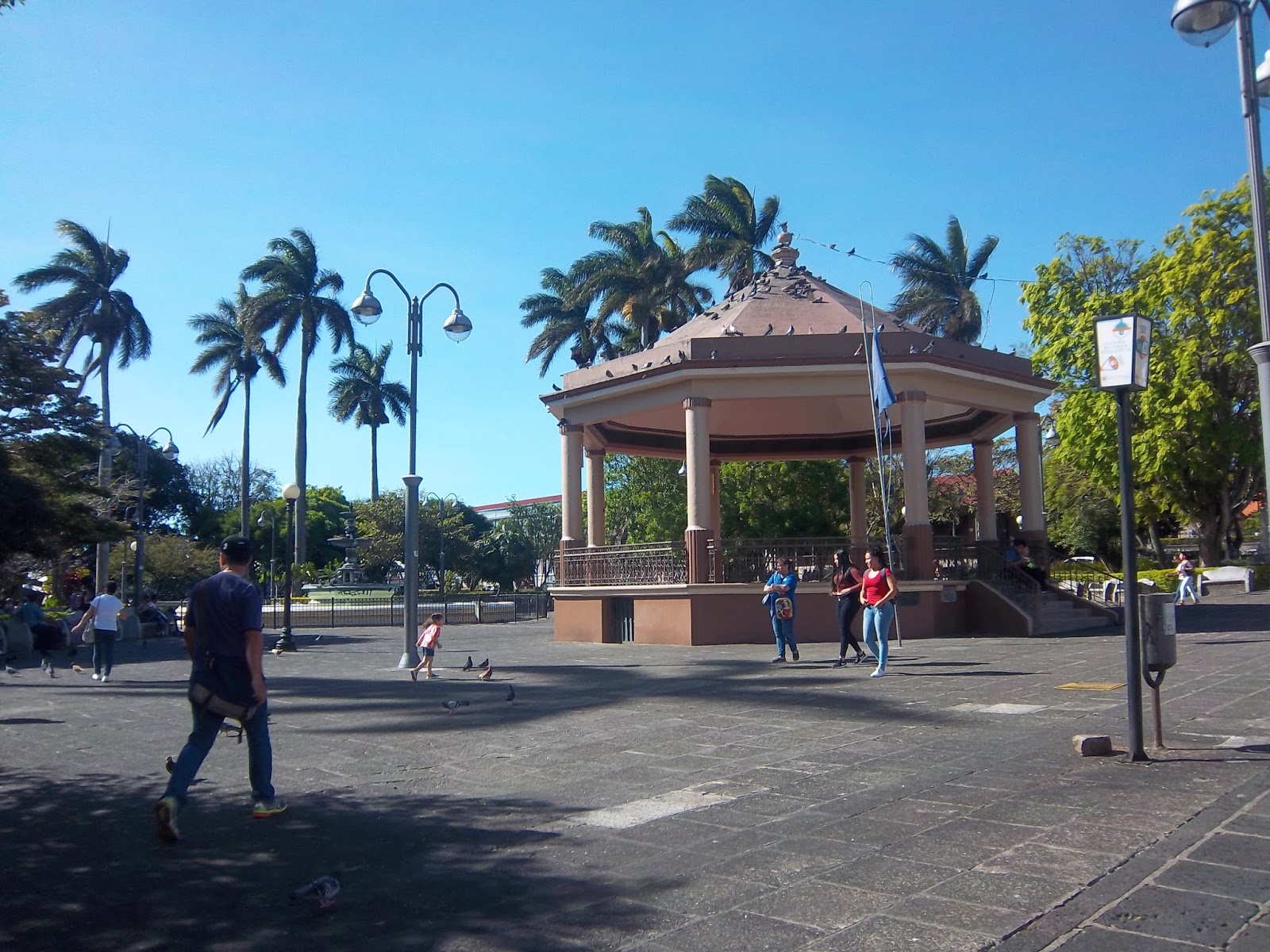
At Intercultura, we had to do just that - in Spanish. Herediais an older colonial era town of about 250,000 people with a large branch of the University of Costa Rica. Since it isn’t a tourist town, the people there don’t practice speaking English very often and seem self-conscious when they do. Almost everyone in the town was very patient with us, conversing with us in our inadequate Spanish.
main plaza in Heredia


While there are many language schools for adults in Costa Rica, La Escuela Intercultura is probably one of the best. We were placed in an intermediate Spanish class with four other students. Our Spanish teacher was excellent constantly changing our activity using every learning method so that the lesson would sink into our older brains. The four hours each day flew by.

In addition to Spanish classes, the school has various cultural activities – tours of Heredia, dance classes, Costa Rican cooking classes. Our favorite was the language exchange. Besides providing Spanish classes, Intercultura provides English classes to the locals. Twice a week we had an opportunity to speak with these students - half an hour in English and half an hour in Spanish. Most of the Costa Rican students were university students and we worried about how interested they’d be in talking to older retired Americans. This worry was totally unfounded. They were very cordial and eager to talk to us, interested in talking to us intent upon hearing everything we had to say about our attitudes on a variety of subjects.


The family we stayed with was very encouraging and spoke to us extensively about Costa Rican life. We arrived at their house on their Election Day. On a walk through their town, they took us to their polling place. The whole town was celebrating as they got out to vote. This was such a contrast to elections in the United States that it was a pleasure to witness. The man of the family was very involved in the campaign. We watched the election returns on TV with him as he talked to us about it throughout the evening. Unfortunately, we only understood about 30% of what he said. This was frustrating to me. I would have loved to have a real discussion with him about the issues facing Costa Rica. By the time we left their house, however, we understood about 60%.

Did we become fluent Spanish speakers? Of course not. Who can become fluent in any language in a couple of weeks? Nevertheless, thanks to Intercultura, we speak Spanish much better than we did before. It was a great experience and I recommend it to anyone who would be able to go there.


Tuesday, January 30, 2018

Frank Lloyd Wright and the Art of De-Cluttering

Oak Park, Illinois, just west of Chicago, is known for many things. One that residents are most proud of is their trove of Frank Lloyd Wright buildings. A number of houses designed by Frank Lloyd Wright are there and the Chicago Architecture Foundation (www.architecture.org) gives a tour of them. In addition, The Frank Lloyd Wright Trust (https://flwright.org/tours) has restored the home that he lived in with his first wife and six children. Guided tours of it are given to the public.

This week we took a tour and it was certainly worth the visit. I had to admire the design of the house. What I especially liked was its simplicity and lack of clutter. The large windows and skylights let in lots of light. The attention to every detail is amazing - from the design of the furniture and murals to the light fixtures and objects on the shelves. Frank Lloyd Wright was an admirer of Japanese art in particular and there are several Japanese sculptures and paintings throughout the house. The influence of Asian design can be seen throughout. Although Frank Lloyd Wright was a collector of objects of art, paintings, and all things unusual and interesting, he was able to design places to put all of them. There are built-in shelves, cabinets, and closets all fitting in beautifully with his overall design. What is left is a feeling of space and clean lines amid an attention to detail that is stunning and beautiful.   

Looking out through windows onto the street

skylight in the dining room

Murals adorning one of the rooms

Inspired by this vision, I left the Frank Lloyd Wright House determined to go home and clean out more closets and shelves. The visit provided me with an ideal for which to strive in my attempt to de-clutter. That house is the gold standard to which I now aspire. Ever since the 2016 election, I’ve been cleaning out closets, emptying drawers and shelves, and shredding any papers that I no longer need. At first, the impetus was to have less to pack in case we have to move. 

Since starting this project, however, I have found some other benefits. I can actually walk in my bedroom walk-in closet. Everything is neatly where I left it. I freed up loads of space in my file cabinets and have room now for all my latest projects. My bookshelves have room for new books and I’m no longer tripping over boxes in the bedroom. I think I like this.

Now it’s onward to the next set of shelves. Next time people come to visit, I hope that they can see some open spaces. It may remind them of Frank Lloyd Wright. 

Monday, January 22, 2018

Why I Participated in the Women's March 2018 in Chattanooga, Tennessee


My Chicago friends will ask me why I marched for women’s rights and social justice in Chattanooga. The short answer is that’s where we were when the 2018 Women’s March occurred. I wished that I was home in Chicago for this occasion, but I was glad that my husband and I marched in Chattanooga because it turned all the stereotypes I had of the South on their heads. We need to shake up our assumptions every so often to stay alive.

As we entered Coolidge Park, I told myself that I would be glad to march with the 100 to 200 people that would brave marching in this small (population about 175,000) Southern city. I told myself not to be afraid of the police or the bystanders who would be jeering at us.


We walked into the park where the warm- up rally was taking place. A singer revved us up covering Aretha Franklin’s R-E-S-P-E-C-T and then I turned around. People kept coming. They were old and young. They were predominantly white but there were some people of color, too. There were men and women. Everyone mingled comfortably.

Then we marched over the bridge into downtown and back over the bridge back to the park. The people kept coming – about 6,000 of them. I didn’t see any police. Nobody on the sidelines jeered. On the contrary, people in the crowds waved and many driving by honked signaling their support.

We talked to people who told us about Democratic women candidates who are running for office in areas where Democrats hadn’t run before. Some said they were in small minorities in their towns. The fact that all these people were there was testament that they were a much larger minority than I thought they were. Students told us they would definitely register to vote. A woman walked with her daughter and granddaughter in a stroller. She said, “I told her [her granddaughter] with tears in my eyes that by the time she went to school, we would have a different president.”

 I only hope that she is able to keep her promise because there was so much to march for.

 I marched to raise my voice to warn the current occupier of the White House that I won’t accept America becoming a Fascist state. I marched to demand respect for all Americans regardless of gender, ability level, skin color, origin, religious affiliation or lack thereof, or sexual orientation. Lastly, I marched to demand that we don’t give up. That we go to the polls in droves in November.


For the first time since November 8, 2016, I acted on these values with hope. When T. got elected, I thought that America was headed to Fascism and we would have to emigrate. For the first time, I’m hopeful that may not happen. If people who hadn’t marched before can march in Chattanooga and cities throughout America, maybe there is hope. Maybe America will regain its ideals. Maybe America can be America again. We all have to keep demanding it – Together.


Tuesday, January 16, 2018

President Trump and the Plight of Refugees

Once again, President Trump has disgusted us and made us feel ashamed to be Americans. This time, it was his racist remarks about people from predominantly non-white countries. Why can’t we have more people from countries like Norway [a very white country], he asked.

A counter-point to Trump’s racism is the book A Time of Miracles by Anne-Laure Bondoux. I read this gem after it was suggested by a group on Goodreads endeavoring to read books from every country in the world.

A Time of Miracles by Anne-Laure Bondoux is a young adult novel that has won literary prizes – the Prix Sorcieres in France and the Mildred L. Batchelder Honor Book in the United States. Anne-Laure Bondoux is without a doubt deserving of these honors.

My horizons were expanded by reading her book and learning of the existence of Abkhazia tucked away in the Caucasus Mountains, a part of the former Soviet Union. It’s a place to which I’m sure I’ll never travel. Reading a book to learn about its inhabitants is the next best thing after visiting there, meeting Abakhazians here, or watching an episode of it on House Hunters International.

A Time of Miracles starts in 1992 shortly after the collapse of the Soviet Union. Blaise Fortune aka Koumail, a seven- year old boy, is with his protector Gloria. In the face of war, they have fled their home determined to get to France where they are sure they’ll have a good, peaceful life imbued with Liberte, Egalite, et Fraternite.

Blaise has been told the story of his early life by Gloria so often that it has become a litany. She took him from the arms of his dying mother after a train wreck. His mother was a French citizen and so is he and thus, he is entitled to live in France. Blaise believes this story – to a point - but something always feels like it’s missing.

Gloria and Blaise travel together from refugee camp to refugee camp. They get involved with smugglers who take them on legs of their journey on the backs of trucks. They walk endlessly on their own, through forests and deserts. They survive malnutrition and many times are on the verge of starvation. The reader learns little of Abkhasia but much about the plight of all refuges everywhere trying to survive from pillar to post until they make it to safe havens.


I am glad that Anne-Laure Bondoux has written this book for teenagers and middle school students. Nevertheless, it’s a story that adults must know also. We all have to be aware of the plight of refugees. Only by knowing about what refugees experience will we understand how vital it is for all of us to do our best to prevent more people from joining their ranks. Read A Time of Miracles now. It tells a story that we all need to hear.

Thursday, December 28, 2017

Revisiting A Dickensian Tale of Hard Times - Then and Now

As the play Hard Times For These Times opens at the Lookingglass Theatre in Chicago, a character is asking his “betters” how he can acquire a divorce. He’s told that it’s not for “people like him” and basically, he has to suck it up and keep working for starvation wages. He is coerced into refraining from being active in a labor union organizing in the fictional Coketown.

From there, we view the life of the upper classes in mid-nineteenth century England and see how they interfaced with the poor and lower working classes to ruin and trample on any sense of dignity they may have had. I won’t provide any spoilers by telling you how the tale ended. You may decide to read Hard Times by Dickens or to go see the play at the Lookingglass Theatre. It was very artfully done using the circus as both a metaphor and a reality of what happens to peoples’ dreams.

After that, read the book Being and Homelessness – Notes From An Underground Artist by John H. Sibley. While Hard Times takes place in England in the 1850’s, John Sibley’s book is a memoir and treatise on homelessness that he published in 2011 about life in contemporary America. John Sibley is an artist and writer who found himself homeless in Chicago for a brief period of time. He was able to extricate himself from that state when someone offered him a good paying job. In his book, Sibley expounds on his ideas as an artist and human being reminding us that if someone is homeless, that is not the totality of who he is.

I was reminded of both books last night when my husband and I volunteered at the all-night homeless shelter run by Interfaith Action of Evanston. It opens on nights that the temperature goes below fifteen degrees Fahrenheit. Its location moves among six faith-based organizations. Sad to say, it is difficult to find enough volunteers to keep it open every day of the year or even every day of the winter – which in the Chicago area usually lasts from December 1st to April 1st. Winters in Chicago can be brutally long and horrendously cold. I can’t think of anything worse than being homeless here in the winter.

I’ll never forget Illinois’ wonderful Senator Paul Simon addressing the Illinois NASW (National Association of Social Workers) about how in Dickens’ time, people asked, “How can England, the most powerful, wealthiest country on Earth allow this to happen [to its poor people]?”

Senator Simon went on to ask how we as Americans in modern times in the wealthiest country in history could allow the same thing to happen. How could we allow our fellow citizens to be homeless and/or food-insecure? Then he left us Illinois social workers to figure out how we could help to get America on a better track.

That question is just as pertinent now as it was years ago when Senator Simon addressed us. And so, I ask everyone of you Readers to ask yourselves the same question: How can we Americans allow this to happen? In 2018, I challenge us all to do something about it.

Thursday, December 21, 2017

Warmth on a Chicago Winter Day

I’ve lived in the Chicago area since 1974. It’s a great place to live, but I’ve always felt it would be even better here if they put a retractable dome over the whole area so that we wouldn’t have to freeze through our long, frigid winters. Unfortunately, that’s not feasible, but the city of Chicago has found a partial solution. Since the 1960’s, they’ve been building, improving, and adding to a Pedway under about five miles of downtown Chicago. It’s a maze that they’ve made easier to navigate in the past few years by putting good signs along it's many paths. Prior to them putting up that signage, it was really easy to get lost there.


Helping us to navigate this maze, the Chicago Architecture Foundation (CAF) www.architecture.org has been giving a walking tour of the Pedway. We took this tour led by Ellen Shubart, CAF docent, who did a great job of shepherding us through this network of underground walkways.

The Pedway was constructed to help people get out of the cold and to connect all the transportation.
The tour begins in The State of Illinois Building, the James R. Thompson Center at 160 North LaSalle. This post-modern building was designed to depict the transparency of government. This was a concept of then governor James Thompson, for whom the building was named, - a fact I was unaware of prior to taking the tour. Four Illinois Governors have gone to prison since I moved here so I found that very humorous. It set a tone of levity for me for the rest of the tour.
Looking up toward the ceiling of the Thompson Center
Next, we went down to the Pedway and saw an entrance to the CTA [Subway]. One can walk on the Pedway from the Ogilvie commuter train Station to the blue and red lines of the subway to the South Shore Line commuter station without going outside. If someone is lucky and works in an office building with an entrance in the Pedway, he (she) can avoid going outside an entire day. How great is that!

The Pedway isn’t merely a walkway, however. Underground are various stores and restaurants and even a stained-glass exhibition. We were able to go to several buildings of interest either historically, architecturally, or currently. Thus, I learned how the County, City, and Court buildings are connected.

Then it was onward to the Cultural Center, the former central Chicago Public Library Building. This beautiful beaux arts building is a landmark and worth a visit by itself. Tours of the building are given Wednesday through Saturday at 1:15PM. In addition, the Cultural Center houses temporary art exhibits and lunchtime concerts each Wednesday at 12:15PM. All of these are free to the public.
Dome in the G.A.R. Hall

From there, we went east and entered through the Pedway to the Prudential Building, the Aon Building, and the Aqua Building designed by the famous architect Jeanne Gang. As we walked, we could see the progression of architecture in Chicago and the world through the decades. And best of all, on December 19th, we didn’t have to go outside at all to see any of them.